



The first question is not always about dimensions. Sometimes it is “How long must this information remain readable, and under what conditions?” The answer guides both material and printing technology.
Define the label’s purpose
A parcel in transit, a container identified for a few days and an asset tracked for years have different needs. Record useful life, handling and storage conditions. Do not confuse blank-roll shelf life with readability after printing.
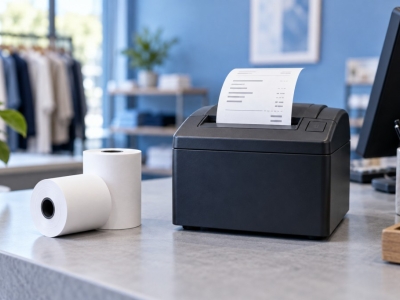
Understand direct thermal
The material reacts to the printhead’s heat without an ink ribbon. This simplicity suits many temporary uses. Image durability still depends on the product and exposure: use its technical sheet rather than assigning one lifespan to every thermal label.
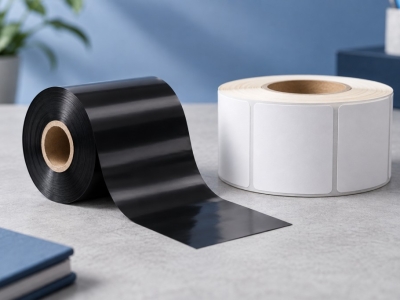
Understand thermal transfer
A ribbon deposits the printed image. Validate ribbon and label stock together, especially for rubbing or demanding conditions. Adding a ribbon does not automatically make any label resistant to every exposure.
Check the machine before switching
Some printers only support direct thermal; others have a thermal-transfer configuration. Check the complete reference and installed options. Include stock, ribbons, changeovers and rejected samples in the cost comparison.
Test for the required outcome
Print the actual layout, apply it to the real object and reproduce the intended use. Check text and barcodes at several stages. For long-term or industrial requirements, request documented validation rather than relying only on the first printed result.
Match your supplies to the application
Explore SEGO's consumables range. To check a reference, send us the dimensions and exact machine model.
Technical documentation : read the manufacturer’s guidance.