

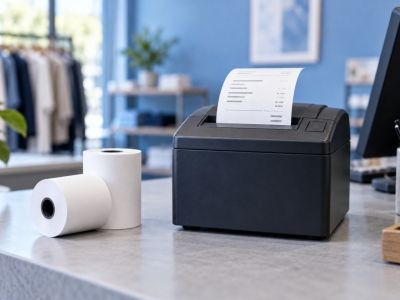
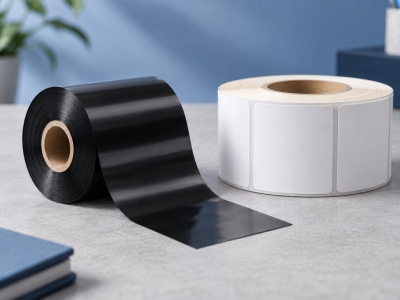
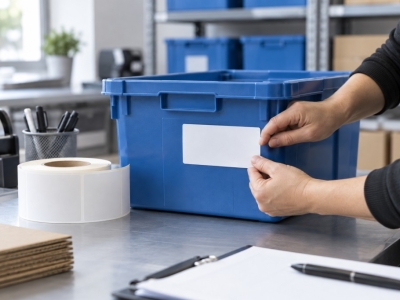

A label that sticks at room temperature may lift after cooling. The correct choice combines facestock, adhesive, printing and application conditions. The word thermal alone does not establish freezer suitability.
Separate two temperatures
Application temperature describes conditions when the label is attached. Service temperature describes conditions it encounters afterwards. Labelling before cooling differs from applying a label to an already cold item. Ask the supplier for both ranges.
Describe the surface during application
State whether packaging is dry, damp, curved or frosted. Identify its material: cardboard, glass and plastic are not interchangeable. Do not assume a cold-use adhesive can tolerate condensation or frost unless this is documented for the selected construction.
Check readability too
Adhesion is not enough if the print becomes unusable. Define how long information must remain readable and how the item is handled. For moisture exposure, request a material and print combination suited to that specific environment. A surface coating does not replace this assessment.
Reproduce the real journey
Test several packages through application, cooling, storage and normal handling. Check edge lift and readability after each stage. Record the tested lot and retain the results for any future consumable or packaging change.
Prepare a useful specification
Record application temperature, minimum and maximum service temperatures, substrate, moisture, duration and printer model. For food contact, request documentation for the exact intended use separately: cold resistance does not establish food-contact suitability.
Match your supplies to the application
Explore SEGO's consumables range. To check a reference, send us the dimensions and exact machine model.
Technical documentation : read the manufacturer’s guidance.